Who was Mazeppa?
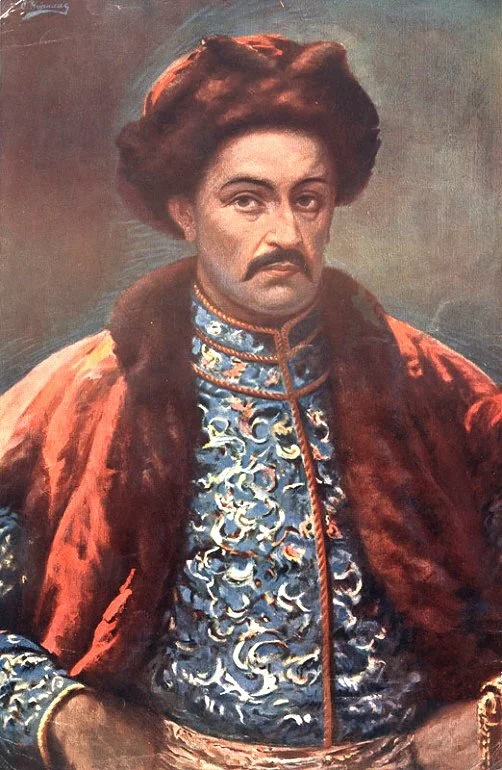
As I continued to study the actual person on whom Liszt’s “Mazeppa” is based, the composition became even more interesting, while also giving me a lot to think about in terms of how the music develops as a story.
The actual historical figure was a man named Ivan Stepanovich Mazeppa, a Ukrainian Cossack leader who lived approximately from 1639 to 1709. He became Commander-in-Chief of the Zaporozhian Cossacks in 1687 and remained one of the most important political figures in Ukraine until his death.
Mazeppa was an extraordinarily complicated historical figure who served as a diplomat, military commander, patron of the arts and education, and eventually an opponent of Tsar Peter the Great.
It was not however Liszt’s goal to present an historically accurate biography, rather a response to the romantic literary myth of Mazeppa, which has an equally fascinating origin.
The story of Ivan Mazeppa became famous through the 1818 poem “Mazeppa” by Lord Byron and, even more directly for Liszt, through Victor Hugo's poem of the same name published in Les Orientales in 1829.
The legend tells of a young Mazeppa who was found guilty of falling in love with the wife of another man and as punishment was bound to a wild horse, and sent racing into the wilderness. It is said that the horse carried him for many miles and eventually collapsed.
Although Mazeppa appeared to be dead he survives, and is discovered by Cossacks who rescue him, ultimately becoming their leader.
This final transformation is enormously important to Liszt, who composes a story in Étude No. 4 that gradually includes all of the following themes:
Punishment
Suffering
Endurance
Apparent death
Resurrection
Triumph
In my next post I will explore why this work is even more fascinating when one considers how Liszt takes this story, and without using a single word, turns the piano into a dramatic narrator. It is a real master class of composition, and study of technique for pianists.