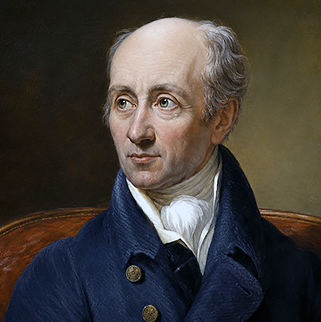
Muzio Clementi (1752—1832)
Muzio Clementi was a composer, pianist, teacher, and musical entrepreneur whose influence on the development of piano music is still felt today. Born in Rome, Italy, on January 23, 1752, Clementi showed extraordinary musical talent at a very young age. His abilities attracted the attention of a wealthy Englishman named Peter Beckford, who arranged for the young musician to move to England to continue his musical education. Clementi was only fourteen years old when he settled at Beckford's estate in Dorset, where he spent several years studying music and developing his keyboard technique. By the time he reached adulthood, Clementi had become an accomplished performer, and he eventually moved to London, where he established himself as one of Europe's leading pianists. His remarkable career would span more than half a century, during which he helped transform the piano from a relatively new instrument into one of the most important voices in classical music.
Clementi's contributions extended far beyond his performing career. He composed numerous piano sonatas, symphonies, and other works, but his most enduring influence came through his piano music and teaching methods. His collection of studies, Gradus ad Parnassum, (Steps to Parnassus) published in three volumes between 1817 and 1826, became one of the most important works in the history of piano pedagogy. Designed to develop technique, musical understanding, and artistic control, these studies challenged pianists to master difficult passages while maintaining clarity and musicality. Many piano students still encounter Clementi's sonatinas and sonatas today, which are valuable for developing coordination, articulation, phrasing, and an understanding of Classical style. Clementi also became a successful publisher and piano manufacturer, helping to promote the instrument's development and expanding its possibilities. It is because of these achievements that he is often called the Father of the Pianoforte. His influence can be heard in the music of later composers, particularly in the technical demands and keyboard writing that helped prepare the way for Beethoven and the Romantic composers who followed.
Despite his considerable accomplishments, Clementi's name is sometimes less familiar to the general public than those of Mozart, Beethoven, or Haydn. Nevertheless, his life offers important lessons for every aspiring pianist. He was not simply a performer who dazzled audiences; he was a musician who devoted himself to improving the instrument, educating future generations, and expanding the possibilities of piano composition. Clementi lived through an extraordinary period of musical history, witnessing the transition from the Classical era toward the beginnings of Romanticism. He died in Evesham, England, on March 10, 1832, at the age of eighty, leaving behind a legacy that reached far beyond the concert stage.
The next time you sit down to practice one of his sonatinas, remember that you are doing more than learning notes written by a composer from centuries ago. You are connecting with a musician who helped shape the very instrument you play today. Clementi's greatest achievement may be that he helped generations of pianists discover what the piano could do—and what they themselves can accomplish through it.