Franz Joseph Haydn—The Man Behind the Music
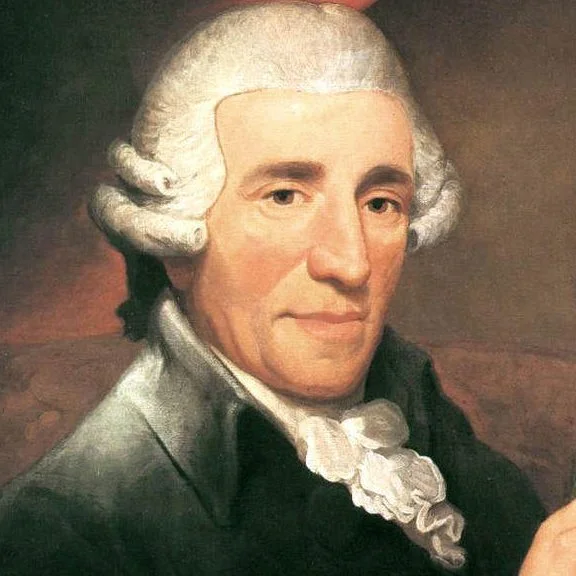
Franz Joseph Haydn (1732—1809)
When we think of Franz Joseph Haydn, we often think of a great composer who helped shape the foundations of classical music. What I find especially interesting about Haydn however is the person behind that music: a man with a beautiful singing voice, a wonderful sense of humor, and an ability to find joy in unexpected places. Born in 1732 in the small Austrian village of Rohrau, Haydn’s father made wooden wheels for a living, and neither of his parents was a professional musician. Yet music was part of family life, and his father enjoyed singing and accompanying himself on the harp. As a young boy, Haydn possessed such a beautiful, clear soprano voice that he was invited to join the choir at St. Stephen’s Cathedral in Vienna. He also learned to play the violin and keyboard. It is remarkable to imagine that a child who began his musical journey in such humble surroundings would eventually become one of the most influential composers in history. His early experiences remind me that greatness does not depend on where we begin, but on what we do with the opportunities we are given.
One of the most charming stories associated with Haydn concerns his Symphony No. 96, affectionately known as the Miracle Symphony. According to the story, a chandelier fell during a performance, yet miraculously no one was injured. The nickname became attached to the symphony, although historians have suggested that the chandelier incident actually occurred at a performance of another Haydn symphony in London. I love this story because it reminds us that music has a life beyond the notes written on the page. A composition can become connected to an extraordinary moment, a memory, or even a little piece of history. Haydn himself spent considerable time in London, where his symphonies were enthusiastically received by audiences. His success there demonstrated that music could cross national boundaries and bring people together through a shared experience. To me, this is one of the most beautiful aspects of being a musician: we may practice alone in a room, but eventually the music can connect us with people whose lives and experiences are completely different from our own.
Haydn’s sense of humor is another quality that makes him especially interesting. He enjoyed practical jokes, and his playful personality often found its way into his compositions. In his famous Symphony No. 94, known as the “Surprise Symphony,” a gentle, quiet melody suddenly erupts into a loud orchestral chord, startling anyone who has settled too comfortably into the music. In his String Quartet in E-flat major, Op. 33, No. 2, often called “The Joke,” he plays with our expectations through pauses, and apparent endings that make listeners wonder whether the music has finished. I think there is something wonderful about a composer who understands that intelligence and humor can coexist. Haydn knew that music did not always have to be solemn to be profound. Sometimes a moment of surprise can teach us just as much as a moment of sadness.
Perhaps the most inspiring thing about Haydn is that his success grew from a combination of discipline, resilience, and an enduring love of music. When his once-beautiful boyhood voice changed during adolescence, he could no longer remain a choirboy and had to find his own way in the musical world. He supported himself through teaching and performing while studying composition, gradually developing the extraordinary craft that would earn him the affectionate nickname “Papa Haydn.” He later spent nearly three decades working for the Esterházy family, composing symphonies, string quartets, operas, and other works for the musicians under his direction. Rather than treating this position as a limitation, he used it as an opportunity to experiment, learn, and grow.
Haydn’s life makes me think about how important it is to remain open to possibilities, especially when circumstances do not unfold as we originally imagined. We may not always control what happens to us, but we can choose how we respond. His legacy also reminds me that a serious commitment to our art need not take away our sense of humor or wonder. If anything, the more deeply we study music, the more reasons we should discover to be grateful for it—and the more joy we can share with others.