The Eccentric Genius of Frédéric Chopin
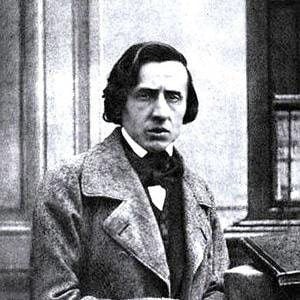
Frédéric Chopin (1810—1849)
One of the things I find fascinating about Frédéric Chopin is that, behind the extraordinary beauty of his music, there was a man whose personality was full of curious contradictions. Chopin was a brilliant pianist, yet he was intensely shy and uncomfortable performing before large audiences. In fact, he preferred to play the piano in complete darkness, sometimes blowing out candles or asking others to extinguish them, even when he was playing at a social gathering! Imagine being invited to a party and discovering that the pianist has decided that everyone must sit in the dark. Yet, in a way, I think this tells us something important about Chopin. He did not necessarily want people to look at him; he wanted them to listen. His music was so personal and intimate that perhaps he felt most comfortable when he could forget the audience and simply enter the world of sound.
Chopin’s relationship with public performance was equally unusual. Although he became one of the most celebrated pianists and composers of the Romantic era, he gave only about thirty public concerts during his adult life. Instead, he earned his living largely by teaching piano and performing in private salons for small groups of wealthy patrons and fellow artists. He reportedly taught around 150 students over the course of his career. Chopin understood that his delicate touch, subtle phrasing, and extraordinary sensitivity could be lost in a large concert hall. He preferred the intimacy of a room where every musical detail could be heard and felt. This reminds me that success does not always require us to follow the path everyone else takes. Some musicians feel most alive on the grandest stages, while others communicate most deeply in a smaller space. The important thing is to understand who we are as artists and to find the environment in which our musical voice can speak most naturally.
Even the details of Chopin’s life seem to contain little mysteries. His birthday is a perfect example. His baptismal certificate gives February 22, 1810, as his date of birth, but Chopin and his parents consistently maintained that he was born on March 1. We may never know with absolute certainty which date is correct. Then there is his famous Minute Waltz, Op. 64, No. 1, which is often assumed to be a piece that should last exactly sixty seconds. In reality, it generally takes around a minute and a half to two minutes to perform. The title is associated with the idea of something small or tiny, rather than a strict measurement of time. I find this especially amusing because it reminds us how easily we can misunderstand something when we accept its name without asking questions. As musicians, we must learn to look beyond the surface—to investigate the history of a composition, understand the meaning of its title, and discover what the composer may have intended. Curiosity is not separate from musical study; it is one of the things that makes musical study so rewarding.
Perhaps the greatest lesson we can take from Chopin’s eccentricities is that extraordinary artistry does not require an ordinary personality. He was shy, sensitive, particular about his surroundings, and uncomfortable with the conventions of public performance. Yet those very qualities may help us understand the remarkable intimacy of his music. When we play Chopin, we are not simply performing notes on a page. We are entering a world of whispers, sighs, and deeply personal emotions. His music asks us to listen carefully, to notice the smallest changes in harmony and color, and to understand that quietness can be just as powerful as brilliance. I think this is an important lesson for every young musician: you do not have to become someone else to become a great artist. You must study, practice, remain curious, and learn to understand your own personality. Chopin may have preferred to play in the dark, but the music he left behind continues to brighten the world.