“La Traviata” at the Met
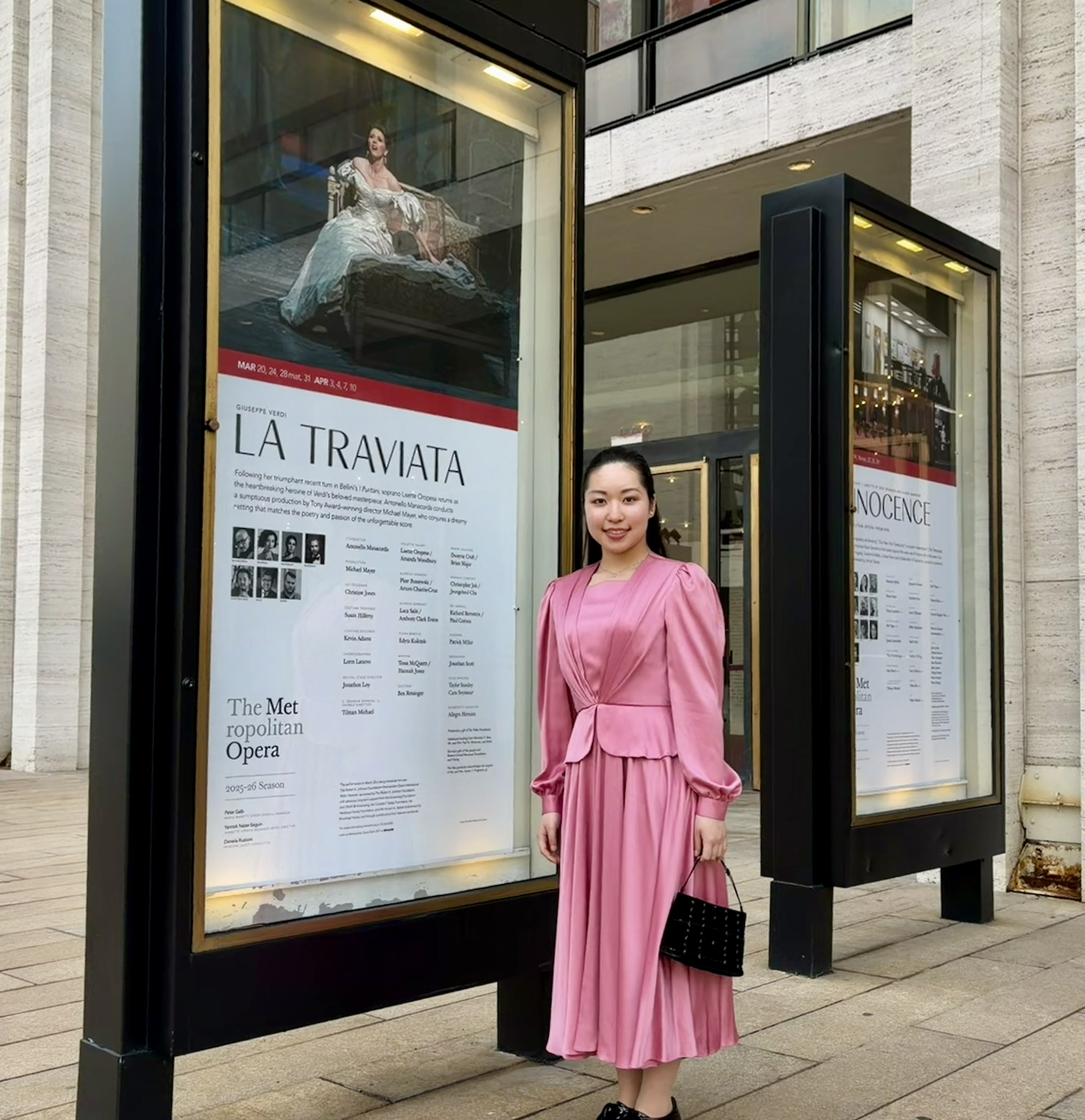
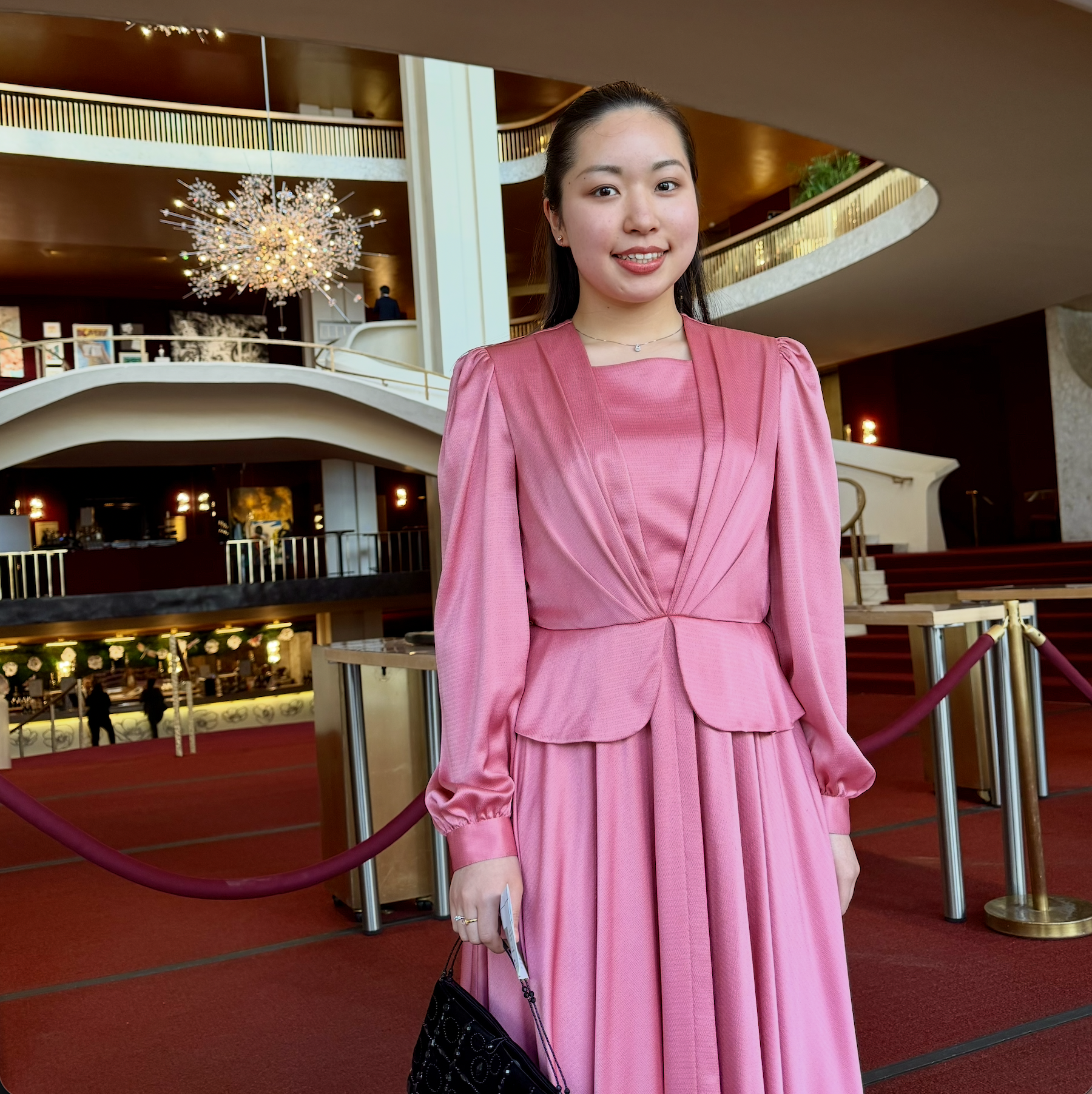
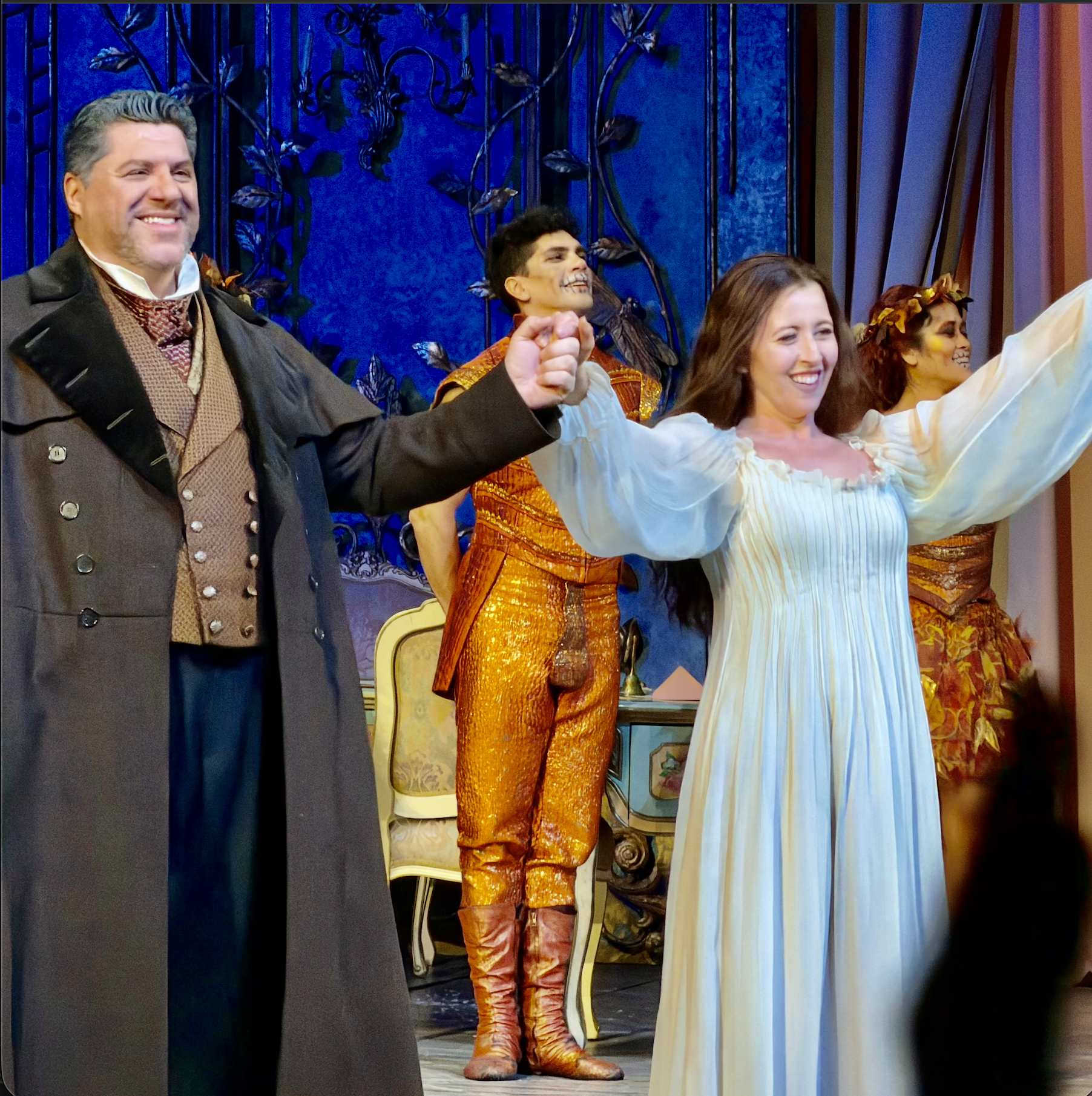
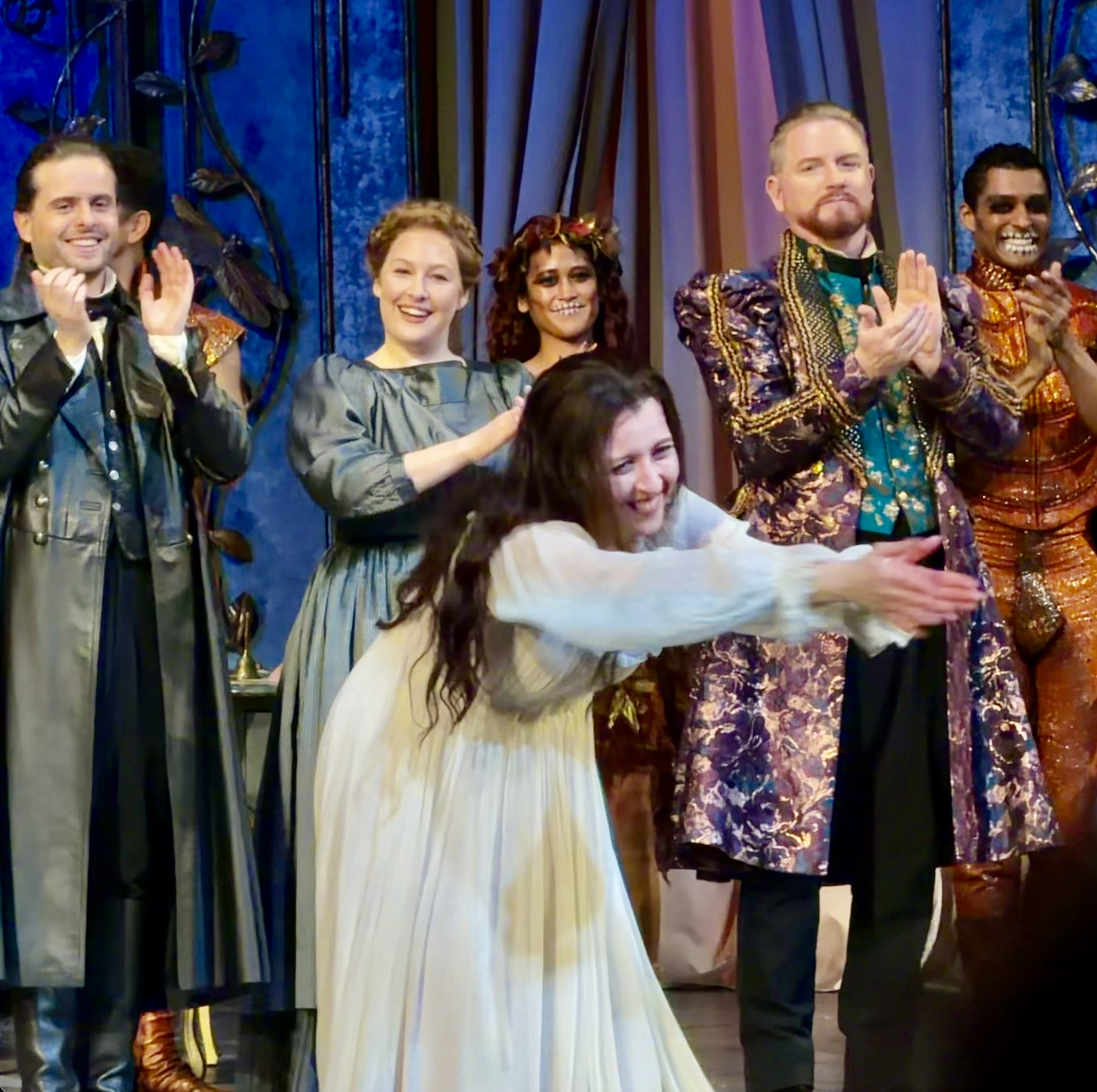
From left to right: At the Metropolitan Opera house for a performance of La Traviata; in the lobby; Luca Salsi and Oropesa taking their bows at the end of the opera; Oropesa thanking the conductor and orchestra.
Last week Mr. Cosmo and Mr. Alexander surprised me and my mother with tickets to see Verdi’s La Traviata at the Metropolitan Opera in New York.
My heart was truly fluttering with excitement after receiving the wonderful surprise. I'm so grateful for them giving me this experience.
Since it was such a special occasion, I decided to wear one of my vintage outfits. I chose an evening suit once worn by my grandmother.
We sat very close to the stage, and I could clearly see the subtle changes in the singers' expressions, the intricate details of the stage set, and how the conductor communicated with everyone and led the performance.
The production was beautiful. I was surprised to see that the stage was sloped downwards towards the audience, and it really enhanced the sense of immersion. There was also a dance scene by ballet dancers. The way they lift and spin in time with the chorus and music is so smooth it's as if gravity defies them. The high level of performance in everything, not just the singing and music, is what makes the Metropolitan Opera so wonderful.
Lisette Oropesa was truly magnificent in the title role! It was my first time seeing her live, but I had seen her in HD in 2019's Massenet's Manon (one of my favorite operas), so I was happy to hear her again. Her technique was incredible, but what surprised me most was the projection of her voice. Normally sound travels upwards so you hear it more clearly on the fifth floor than on the first floor, but her voice resonated just as well on the first floor as it did on the top floor, even when she sang with a quieter, inward tone.
Her acting was also wonderful. There are many operas that are tragedies ending in death, but in those emotionally charged scenes, the singers often sing with many grace notes and difficult technique, and the singers are actually very energetic, so you don't really feel the fragility of someone whose life is ending. However, Oropesa's performance made it seem as if she was truly on the verge of death, and it moved me deeply. I was reminded once again of the importance and wonder of showing the audience a completely different world with overwhelming technique and deep emotional portrayal.
It was also extremely helpful for my own work at the piano. First of all, the way the singers expressed the sense of unease that you can feel from the opera's music, acting, and production right from the beginning—a kind of slightly unsettling feeling that suggests it won't lead to a big happy ending but rather to collapse—was exquisite.
And I have learned a lot from this opera, especially now that I am working on Liszt's Réminiscences de Norma. In this production, while the orchestra plays the overture, the ending of the story is depicted on stage (Violetta lying in bed after her death, then leaving the room alone, and the people around her grieving), which I thought was similar to how Liszt started the Norma transcription. He takes excerpts from the music of Norma's actual entrance scene in the opera and transforms it into a great introduction, which to me sounds like a depiction of the ending—a judgment, a death sentence, and bells.
I also noticed that towards the end of the opera, in Violetta's aria to Alfredo just before her death, the strings constantly play a rhythmic interjection that resembles Beethoven's "fate rhythm." It was very similar to the interjection played by the timpani in Norma's "Qual cor tradisti" aria. I need to think about this more, but I felt that this motif evokes a sense of impending fate, and that there are similarities in that the protagonist, facing the end of their life, conveys something to their lover, revealing their innermost feelings.
Such a wonderful evening!
Tap an icon below to share this blog on social media, email, or your favorite messaging app.