Beethoven’s Conversation Notebooks
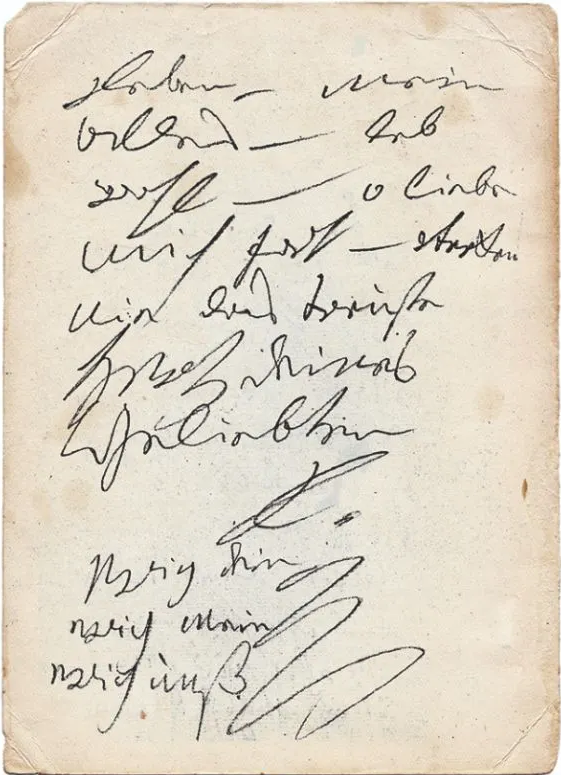
A page from one of Beethoven’s Conversation Notebooks
One of the most extraordinary things about Ludwig van Beethoven is that as his hearing deteriorated, he began to rely on small notebooks to communicate with the people around him. These became known as his Conversation Books, or Conversation Notebooks. Beginning around 1818, when his deafness had become so severe that ordinary conversation was nearly impossible, Beethoven's visitors would write their questions, comments, and thoughts in these notebooks, and he would respond verbally. Although Beethoven generally did not write his own replies, the surviving pages provide us with an unusually intimate glimpse into his everyday life. They reveal a man who was not simply a musical genius living in isolation, but someone who worried about money, discussed politics, argued with friends, made plans, complained about his health, and occasionally displayed a wonderfully sharp sense of humor.
What makes these notebooks particularly fascinating is the contrast between the ordinary concerns recorded on their pages and the extraordinary music Beethoven was creating at the same time. During this period, he composed some of the most profound and revolutionary works in the history of classical music, including his late piano sonatas, the Missa Solemnis, and the Ninth Symphony. Imagine spending your morning discussing household expenses, worrying about a meal, or becoming frustrated with a visitor, and then sitting down to create music that would fundamentally change the direction of Western civilization! The notebooks remind us that Beethoven's genius did not exist separately from his humanity. He was a complicated individual, sometimes impatient, sometimes generous, frequently frustrated, and deeply committed to his artistic vision. They also help us understand the practical difficulties of his daily existence as his deafness increasingly separated him from the world around him.
Perhaps most importantly, the Conversation Notebooks help historians and musicians understand the circumstances under which Beethoven composed. They provide evidence of his relationships, his working habits, financial struggles, and his continuing interest in the intellectual and political questions of his time. They also reveal how much he depended upon the assistance of others, even as he fiercely protected his independence. However, it is important to remember that these notebooks are not a complete record of Beethoven's thoughts. Many conversations were never written down, some notebooks have disappeared, and the surviving entries frequently reflect the particular concerns of whoever happened to be visiting him. Nevertheless, they offer an invaluable historical record that accompanies his letters, musical manuscripts, and the recollections of those who knew him. In a sense, they allow us to hear the conversations that Beethoven himself could no longer hear.
For young musicians, there is a particularly important lesson to be found in these remarkable documents. We often study composers through their masterpieces, examining the notes on the page, the structure of a sonata, or the emotional character of a symphony. Still, behind every composition is a human being with experiences, disappointments, ambitions, relationships, and questions about the world. Beethoven's Conversation Notebooks remind us that understanding a composer means looking beyond the music and trying to understand the person who created it. His deafness might have deprived him of the ability to hear the sounds of the world, but it never deprived him of his imagination or his determination to communicate through music. Perhaps that is one of the most inspiring things about Beethoven: even when ordinary conversation became almost impossible, he continued to speak to humanity through his compositions.
More than two centuries later, we are still listening.