Alicia de Larrocha
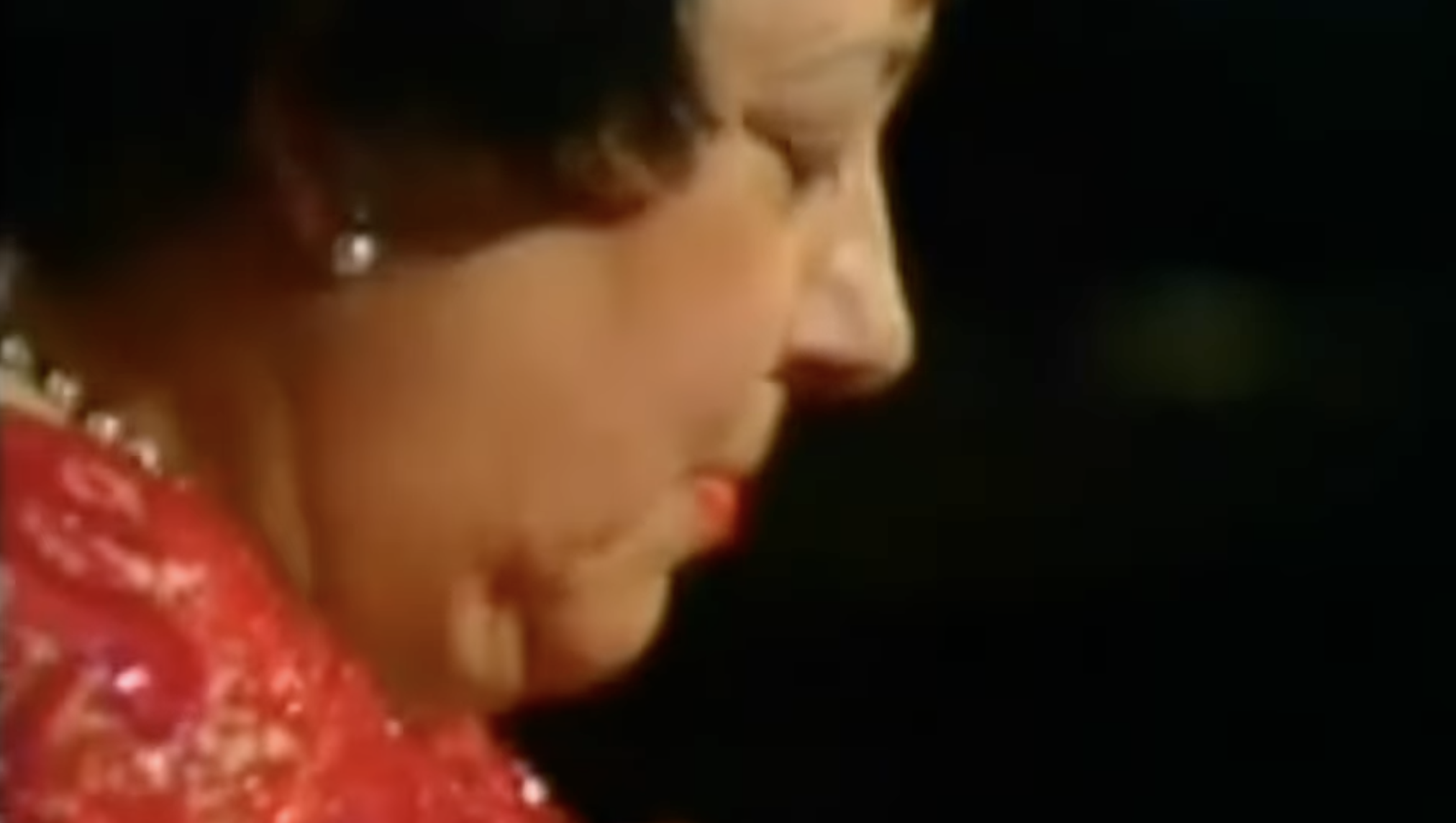
From left to right: A performance of Triana from “Iberia” by Isaac Albéniz; “El Fandango del Candil” from Goyescas (Suite) by Enrique Granados; Mozart, Piano Sonata in A Major, K. 331: iii. Alla turca. Allegretto; Chopin, Nocturne, Op. 9, No. 2.
Continuing my celebration of Women’s History Month, today I am looking at the life of pianist Alicia de Larrocha.
Although it might seem hard to imagine, when Alicia de Larrocha retired from public performance at the age of 80, her career spanned 76 years. She is thought by many to be the leading pianist of her time, the greatest Spanish pianist in history, and one of the greatest piano legends of the 20th century.
As the daughter of parents who were both pianists, and the niece of another pianist, she began studying at the age of three.
Small in stature, standing at just under five feet (1.53 m), she was praised throughout her career for her amazing technique. Comments were often made on how small her hands were, barely spanning a tenth on a keyboard. She constantly practiced stretching exercises that increased their elasticity and performed all of the major repertoire, including all five Beethoven concertos, along with those of Brahms, Liszt, and Rachmaninoff.
de Larrocha created a huge discography of both solo repertoire as well as works by Spanish composers, being best known for her recordings of works by Isaac Albéniz, Manuel de Falla, Enrique Granados and Federico Monpou, although her first recordings were of Chopin when she was just age nine.
Constantly honored throughout her career, she was nominated for fourteen Grammy Awards and won four times, along with four wins of the Grand Prix du Disque, three Edison Awards, and being named Musician of the Year by Musical America in 1978.
While often compared to the great pianist Vladimir Horowitz, something which critics would do frequently, she would quickly address the situation by saying “I am me, and I don’t like anybody to compare me to others.”
Once, when asked to share some on-the-road stories from her decades of concertizing around the world, she described two very unusual episodes in a 1995 interview with James Barron of The New York Times:
Once she was locked in a rehearsal studio in South Africa; the guard, not realizing she was still inside practicing, shut off the electricity for the night. "I was touching the walls to find the switch for the lights," she said. Finally she found a telephone and called the concert promoter, pleading, "Can you rescue me?"
And then there was a trip to west Africa. She was bumped from a scheduled jet flight from Johannesburg. With a concert to play, she chartered a single-engine plane whose pilot, it turned out, liked to fly low.
"He was saying, 'Look at the lions.' " "Then he asked if I had a telephone number for where I was going. I said yes, but why? He said: 'Animals go out to eat and I don't want to leave you. There's a phone booth but nobody there. Don't go out of the phone booth.' " Left at a deserted landing strip, she said: "I was in that phone booth for 20 minutes before they finally came and picked me up. It was an eternity.”
Tap an icon below to share this blog on social media, email, or your favorite messaging app.